Brussels’ Ukraine Enlargement Policy: A Political Dead End for National Minorities
2026. March 21.
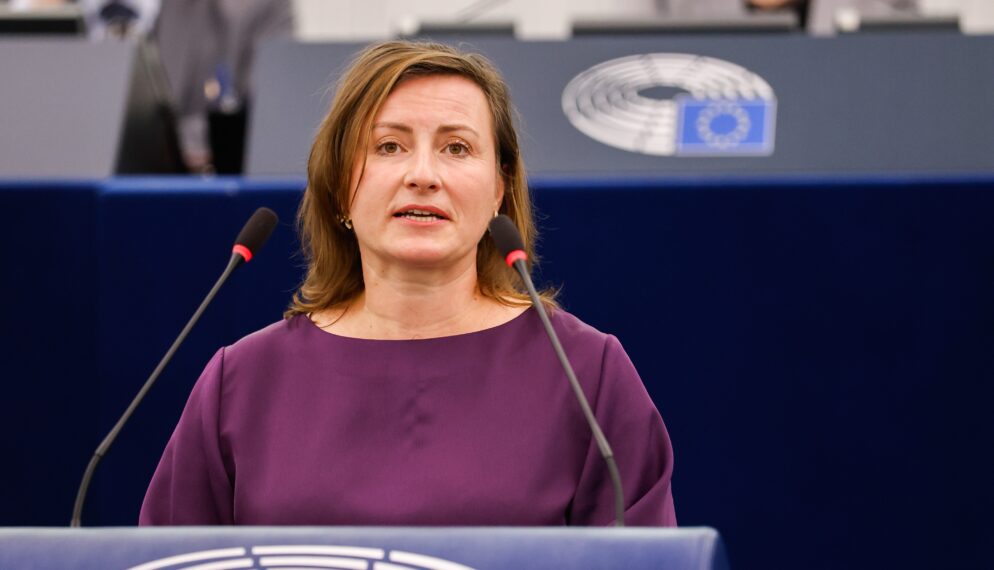
The Delegation to the EU–Ukraine Parliamentary Association Committee (PAC) held last week a meeting during which Members of the European Parliament exchanged views on Ukraine’s accession and the possibilities for supporting it.Viktória Ferenc, MEP for Fidesz–KDNP and a member of the Patriots for Europe group, emphasized in her address: “Ukraine’s rushed accession would mean that the problems of national minorities are deliberately swept aside. Ensuring their rights would no longer be a fundamental precondition of accession but would instead be deliberately set aside as an issue to be addressed ‘later’.In addition, we continue to receive daily reports about serious human rights abuses committed during military conscription.Instead of consistently demanding the full implementation of the Copenhagen criteria — that ismerit-based enlargement —, this House is pushing a politically driven, accelerated, so-called reverse accession logic.”
“We are all aware that, within the European Union, respecting and guaranteeing minority rights is a fundamental obligation of the Member States. Nevertheless, practice shows that this obligation is often not adequately fulfilled, and as a result, minority-related issues remain unresolved in many Member States. In light of this, it can be stated that what is not settled before accession will most likely never be settled afterwards. This is not a solution. This is a political dead end for national minorities. We cannot support an accession process that tolerates human and minority rights violations, that sacrifice EU standards, and that puts the Transcarpathian Hungarian community in a vulnerable position. There can be only one standard in the accession process: the fulfilment of the conditions,” the MEP added.
Viktória Ferenc stated: “In the case of the Committee on Foreign Affairs’ draft annual report on Ukraine and the draft statement prepared for the next meeting of the EU–Ukraine PAC, we are facing biased documents built on double standards, ones that reflect neither reality nor a fair and objective assessment. The documents are lenient towards Ukraine while unfairly criticising Hungary for exercising its veto right, a legitimate tool that has been used by other Member States throughout the history of EU enlargement.”
“At the same time, Hungary has consistently demonstrated solidarity with people in need, including those affected by the war. But solidarity does not mean abandoning the right to raise concerns. I agree that it is tragic and deeply distressing that war is raging in Ukraine. As a Hungarian from Transcarpathia, I do not speak about this in abstract terms. My own community is suffering the consequences of this war every single day. However, the war must not be used as a justification for disregarding serious concerns related to fundamental values in Ukraine,” the MEP of Transcarpathian origin concluded.